
Reel Iron Documentary
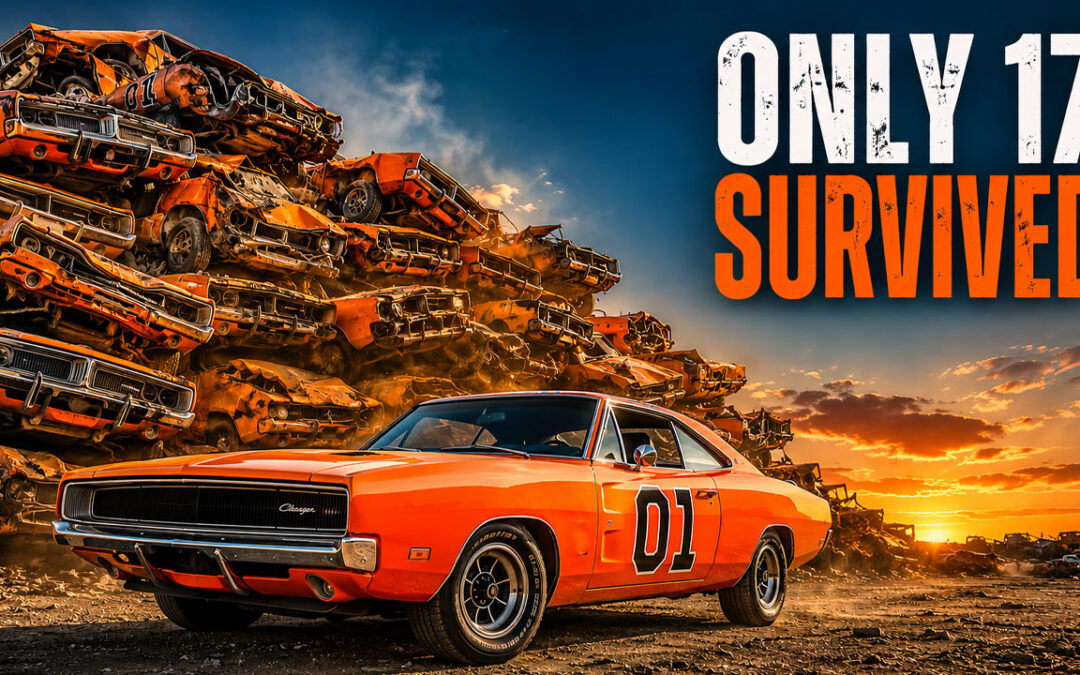
Hollywood Destroyed 300 of These Cars to Make a TV Show. Only 17 Survived.
The General Lee is the most famous car in television history. The truth behind how they built it — and burned through it — is wilder than anything Hazzard County ever put on screen.
There's a moment in the very first episode of The Dukes of Hazzard — eight seconds of footage — that the show's editors would recycle, patch, and splice across seven seasons of television. Eight seconds. One jump. One 1969 Dodge Charger catching 82 feet of Georgia air and landing hard enough to total it on impact.
That jump, that car, that moment became the visual signature of one of the highest-rated shows in American TV history. And it also set the template for what came next: an industrial-scale consumption of one of the most coveted muscle cars ever built, at a rate that makes even devoted gearheads wince when they do the math.
By the time production wrapped in 1985, the crew had gone through an estimated 300-plus 1969 Dodge Chargers. At the peak of Dukes mania, Universal was paying scouts to comb junkyards, track down barn finds, and — yes — dispatch airplanes to locate replacement cars from the air. The show had become something the industry had never quite seen before: a production that was actively strip-mining the American landscape of a single model year of a single car.
The wrong car for the job — and the right one for the legend
Here's something that gets lost in the mythology: the 1969 Charger was never the obvious choice for a stunt car. It was heavy. The roofline was low. The doors were wide. And in a production decision that started as a cost-saving shortcut and ended as one of the most recognizable design details in television history, those doors were welded shut — not for aesthetics, but because repeatedly opening and closing them during high-impact stunts was tearing the bodies apart.
The window entry became iconic. The car became iconic. But the Charger was, in stunt coordinator terms, a bruiser — built for straight-line speed, not the kind of sustained abuse that jumping dirt roads in rural Georgia would demand of it. The physics were unforgiving. A car hitting the ground after an 82-foot jump absorbs forces that no production suspension was engineered to survive. And they didn't. Every jump was essentially a controlled destruction event.
In the documentary
The Reel Iron breakdown of the physics behind the 82-foot record jump — and why that footage became the most recycled eight seconds in TV history — starts at the 4:30 mark and reframes everything you thought you knew about how the show manufactured its most iconic image.
Watch on YouTube →Airplanes, junkyards, and the art of hunting muscle cars
At some point during the show's peak years, the production team realized they had a serious supply problem. The 1969 Charger wasn't being manufactured anymore — it was a six-year-old car when the show launched in 1979. Every one they wrecked was gone from the pool permanently. And the show was burning through them fast.
The response was extraordinary in its resourcefulness and a little staggering in retrospect. Scouts fanned out across the country. Junkyards were combed. Classified ads were tracked. And when ground-level searching wasn't enough, the studio reportedly sent up small aircraft to scan rural areas from altitude — because a 1969 Charger, even sitting in a field or behind a barn, has a roofline distinctive enough to spot from the air.
This is what happens when a television show becomes culturally enormous faster than anyone planned for. The production infrastructure scrambles to keep up with the audience's appetite, and in this case, the audience's appetite was consuming an irreplaceable artifact of American automotive history one jump at a time.
The miniature problem — and how cheap models helped kill the show
By the later seasons, the math had become brutal. Real Chargers were getting harder to find, more expensive to acquire, and the viewing public — who had watched the show's car carnage with genuine delight for years — was starting to notice something was off. What they were noticing, though they may not have been able to articulate it, was the growing use of scale miniatures.
When you can't keep sourcing real cars at the rate the scripts demand, you start supplementing with models. And 1985-era television miniature effects, however sophisticated for the time, don't hold up against the visceral reality of a full-size Charger getting airborne. The audience felt the difference before they could explain it. The energy changed. The spell started to break.
It's one of the more quietly fascinating production stories in television history: a show that died, at least partly, because it had physically consumed too many of its own props. The General Lee didn't just cost money — it had a finite supply, and the show outlived it.
The rivalry you didn't see coming
The documentary gets into the General Lee's complicated relationship with Knight Rider's KITT — and how the battle between the two most famous cars on 1980s television shaped both shows' trajectories. It's a chapter of TV history that's rarely examined this directly.
Watch on YouTube →Seventeen cars and a paradox
Of the estimated 300-plus Chargers that went through production, only 17 have been verified as survivors. Some are in museums. Some are in private collections. A few have documented lineage — stunt use records, production photos, studio paperwork — and those are the ones that command serious money and serious attention when they surface at auction.
But here's the paradox that makes the General Lee story genuinely complicated for anyone who cares about automotive history: the show both elevated and erased the 1969 Charger simultaneously. It made the car a cultural icon — the most famous muscle car in America by pure name recognition. And it destroyed hundreds of them to do it. The fame and the loss are inseparable. Every remaining survivor exists in the shadow of the cars that didn't make it, which were sacrificed to build the legend that makes the survivors valuable.
There's something almost elegiac about that, if you sit with it long enough. The General Lee was never one car. It was dozens of cars, then hundreds, performing a single immortal character across seven seasons. The car on screen was always already a fiction. The only real thing was the wreckage.
What's in the documentary — chapter by chapter
The full production story is wilder than the legend
Reel Iron's documentary runs through every chapter — the accidental design decisions, the desperate supply hunts, the miniature shortcuts, the surviving cars — with the kind of forensic detail that car people actually want. No filler. No padding. Just the real story of how television's greatest muscle car got made, and unmade, one jump at a time.
Watch the Reel Iron Documentary →